

Blog
Eiffel Tower Sex Position: Meaning, Steps & Tips

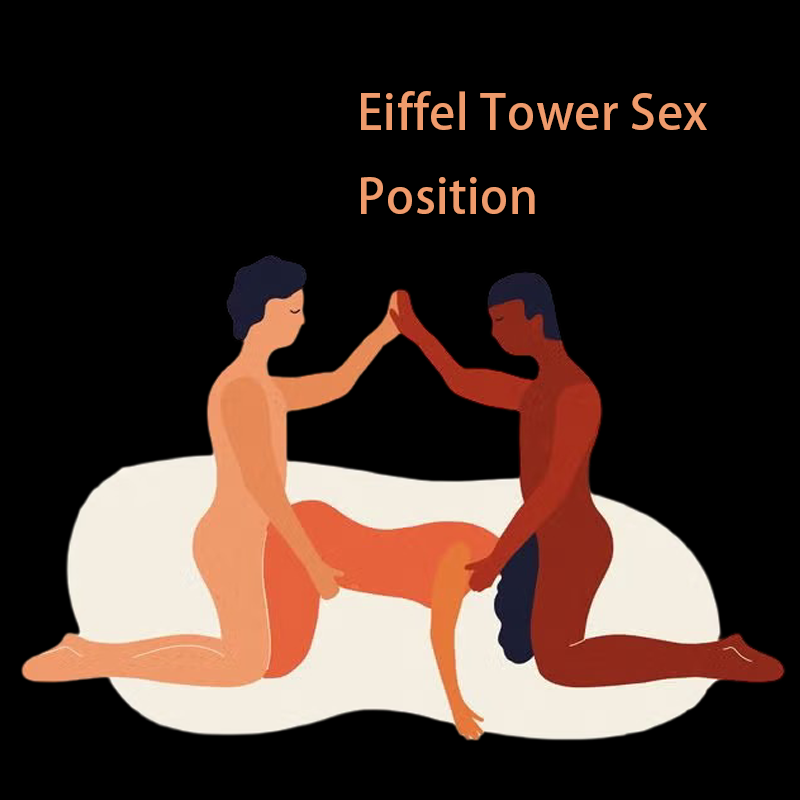
The Eiffel Tower sex position takes its name from the Paris landmark and usually involves three or more people arranged in a setup that loosely resembles its shape. It sounds a little ridiculous when you first hear the name, but the actual setup is pretty straightforward once you understand how everyone fits into it.
It’s also far more well-known than most group positions. Interest in threesomes has grown steadily over the years, and Pornhub’s 2021 Year in Review reported a 40% increase in searches for “threesome” worldwide. So even people who have never tried the Eiffel Tower have probably heard it mentioned before.
In this article, we’ll break down how the Eiffel Tower position works, look at a few common variations, and cover some practical things worth knowing before anyone decides to try it.

What is the Eiffel Tower Sex Position?
The Eiffel Tower sex position usually involves three or more people. The setup gets its name from the way everyone is arranged, loosely forming the shape of the Eiffel Tower. At first glance it sounds more complicated than it really is. In practice, it mostly comes down to where everyone is positioned and making sure things are agreed on before anything starts.
In a more standard version, one person is in the middle on all fours and acts as the “base.” One partner is positioned in front, while another comes in from behind. That leaves the two outside partners on opposite sides of the base partner. In some setups, they’ll even reach over and touch hands above the center, which is where the whole “tower” idea comes from.
Most people don’t just wing this without talking it through first. It does take some coordination, but more importantly, everyone needs to actually be comfortable with how things are set up. A quick conversation beforehand usually makes or breaks it—without that, the whole thing can feel awkward pretty fast.

How the Eiffel Tower Sex Position Works (Step-by-Step Breakdown)
Step 1: Get the base partner into position
The middle partner drops down on hands and knees, then shifts around a bit to find a stable, comfortable stance. Usually that means adjusting the knees, relaxing the arms, and making sure the hips aren’t sitting too low or too tight. This is the spot everything else builds off, so people tend to take a second here to get it right before anyone else moves in.
Step 2: Front-facing partner comes in
One partner moves into place at the front of the base partner and stays close enough for direct contact right away. This side is face-to-face, so things usually start with simple positioning—hands on the hips or waist first, then easing into alignment once it feels stable. Nothing rushed here, just getting locked into the right spot.
Step 3: Rear partner joins
The second outside partner comes in behind the base partner and settles into position. At this point, the base partner is basically in the middle of both sides, so small adjustments start happening—foot placement, spacing, and how close everyone stands or leans in. Once that’s set, the front-and-back structure is basically complete.
Step 4: The “tower” moment (hand connection)
Once both outside partners are positioned, they lean in slightly and reach over the base partner. Their hands meet above the center—sometimes just a quick touch, sometimes a proper high-five. It’s a simple move, but visually it’s what gives the whole position its “Eiffel Tower” name, since it forms that triangle shape over the middle.
Step 5: Find a workable rhythm
After everything is set, it becomes more about syncing than setup. Both outside partners adjust how they move so the base partner isn’t getting pulled or shifted too much from either side. Usually it takes a few seconds of small corrections—changing stance, easing pressure, or shifting distance—before things settle into something that feels consistent for everyone.

Variations of the Eiffel Tower Position
1. Flipped Eiffel Tower
In the Flipped Eiffel Tower variation, the base partner switches things up and lies flat on their back instead of staying on hands and knees. From there, the two outside partners keep their same roles—one up front, one coming in from behind.
The biggest change here is the angle. With the base partner on their back, everything opens up a bit more. It doesn’t feel as tight or stacked as the original setup. The shape is still there, just turned into a flatter layout that spreads things out a little.
2. Lying Down Eiffel Tower
The Lying Down version slows things down a bit. Instead of staying upright or on all fours, all three people stay lower to the surface.
The base partner turns slightly onto their side, while the two outside partners also drop down and line up alongside. It’s less of a vertical “tower” and more of a flat formation where everyone’s on the same level. The spacing feels closer, but the setup itself is more relaxed and less structured.
3. Double-Stack Eiffel Tower
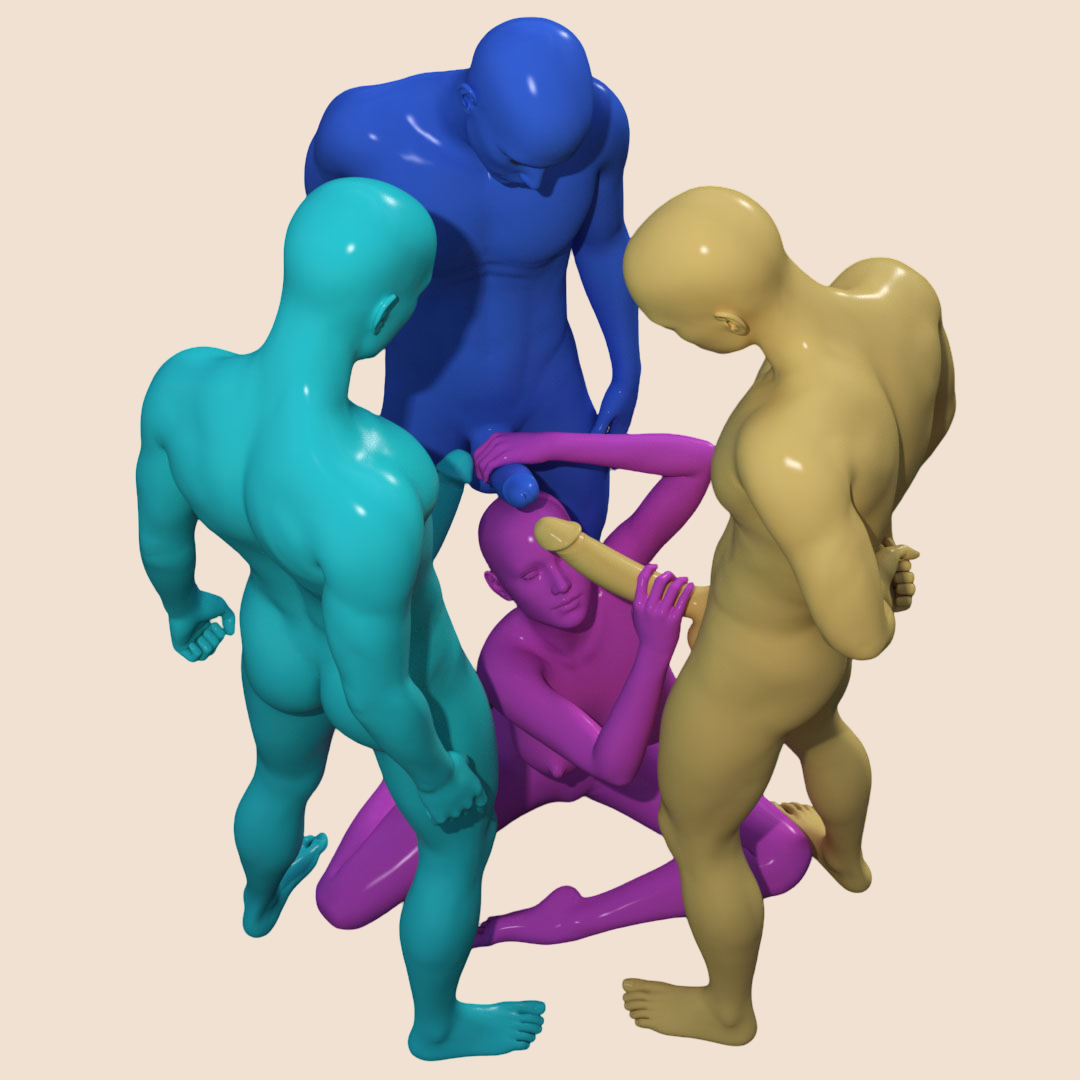
The Double-Stack version adds a fourth person, which changes the whole setup pretty noticeably. The original base partner still stays in the center, but now there’s another layer built into the mix.
That extra person fills in another position around the middle, so instead of a simple triangle, it turns into more of a stacked group arrangement. Everyone ends up adjusting around the center point rather than sticking to fixed spots, which makes the layout feel busier and less rigid than the original version.
Eiffel Tower vs. Spit Roast: What’s the Difference?
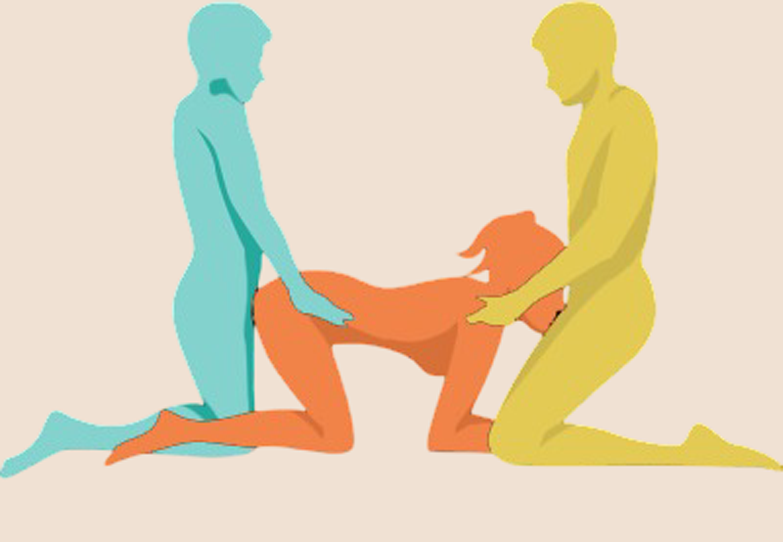
The only real difference between spit roasting and the Eiffel Tower position is that little high five or hand connection at the top.
Wait, isn’t that basically the same thing? Yeah, pretty much. The Eiffel Tower just adds that extra detail where the two outside partners reach over and connect hands above the base—kind of forming that “tower” shape people talk about.
Outside of that, the setups are almost identical. And honestly, most people don’t overthink whether they’re doing one or the other. Unless someone’s really focused on the hand connection part, it usually ends up feeling like the same thing in practice anyway.
Busting Myths About the Eiffel Tower Position
There are a few misconceptions that come up around the Eiffel Tower position, mostly from confusion or people repeating half-accurate info. A couple of the common ones are worth clearing up.
Myth 1: It has to be male-female-male.
The Eiffel Tower position isn’t tied to any specific gender setup. It works with any mix of genders or orientations. The structure is about where people are positioned, not who they are.

Myth 2: It has to involve exactly three people.
Three is just the most common setup, not a rule. Some people add a fourth person or adjust the arrangement depending on space and comfort. The core idea stays the same, but the group size isn’t fixed.
Trying the Eiffel Tower Sex Position Safely
Talk first, don’t assume anything
This kind of setup only really works when everyone’s on the same page. Doesn’t need to be a big serious talk—just a quick check so nobody’s guessing once things actually start.
People skip this all the time and then realize halfway through that they were expecting different things. Not a disaster, just awkward.
Protection is just part of the setup
This isn’t something you figure out in the moment. If things are happening between multiple people, protection should already be handled.
If condoms, lube, a vibrator, a cock ring, a dildo, or any other toys are part of the plan, mention it upfront. Group setups tend to move quickly, and nobody wants to stop halfway through because they’re suddenly trying to figure out where the toy goes or who’s using it.
And in a three-person situation, things move fast and change positions a lot. You really don’t want to be sorting that stuff out on the fly.
Don’t skip the check-in after
After things calm down a bit, just take a minute.
Some people are totally fine, others just go quiet for a bit or need space. Both are normal.
Even a quick “you good?” before everyone moves on is usually enough. Nothing deep, just checking in.
Boundaries matter in real time, not just before
Most people talk about limits beforehand. The real test is what happens during.
If someone wants to stop or pause, you stop. Simple as that. No pushing, no trying to power through it.
That’s really the part that keeps everything from getting messy.
Common Mistakes to Avoid
Most issues with the Eiffel Tower setup don’t come from the position itself, but from how people rush into it without sorting the basics first.
One of the biggest mistakes is skipping the conversation beforehand. People assume everyone’s thinking the same thing, then things start and it turns out they’re not.
Another common one is not paying attention to spacing and timing. With three people involved, it’s easy for things to feel off if everyone just moves at their own pace without adjusting to each other.
Protection also gets treated as an afterthought more often than it should. Once things are already happening, nobody wants to pause and deal with it, so it’s better handled upfront instead of in the moment.
And finally, ignoring boundaries when things get going is where problems usually start. If someone hesitates or wants to slow down, it shouldn’t turn into a discussion or something to push through.
FAQ About the Eiffel Tower Sex Position
How many people are needed?
Most versions involve three people. That’s the standard setup people refer to, although variations do exist depending on the group and comfort level.
Is it difficult to coordinate?
It can be if nobody talks beforehand. Once everyone knows their role and keeps a steady pace, it’s mostly about small adjustments rather than anything complicated.
Do all participants need to interact with each other?
Not necessarily. In some setups, the two outside partners interact slightly (like touching hands), but the main focus is usually on the center partner rather than the outside connection.
Is communication important in this setup?
Yes, more than people expect. A quick conversation before starting usually avoids most confusion once things are already in motion.
Can beginners try it?
Some people do, but it’s not something to rush into without preparation. Comfort levels, spacing, and timing matter more than trying to “get it right” on the first attempt.
Conclusion
The Eiffel Tower sex position is a more advanced group setup, and it’s not something most people just figure out on the fly. When it works, it usually comes down to everyone being on the same page and not guessing what’s supposed to happen next.
Talking beforehand helps more than anything, and so does checking in during it instead of just pushing through awkward moments or mismatched expectations. That part tends to decide how smooth things feel overall.
If it’s your first time trying it, or you’re just switching up variations, there’s no real need to overcomplicate it. It usually goes better when people stop chasing a “perfect” setup and just adjust as they go.
More Position You May Like to Read:
CEO Sex Position: A Beginner’s Guide
Jackhammer Sex Position: Deeper, More Dominant
| M | T | W | T | F | S | S |
|---|---|---|---|---|---|---|
| 1 | 2 | 3 | 4 | |||
| 5 | 6 | 7 | 8 | 9 | 10 | 11 |
| 12 | 13 | 14 | 15 | 16 | 17 | 18 |
| 19 | 20 | 21 | 22 | 23 | 24 | 25 |
| 26 | 27 | 28 | 29 | 30 | 31 | |

Honestly, I always thought the Eiffel Tower and spit roast were the exact same thing. Never realized the hand-holding part was what gave it a different name.
Same here. For years I assumed they were basically the same thing. The funny part is that the whole distinction really comes down to the high-five. Take that away and most people would just call it a spit roast.😂