Blog
Clothespin Sex Position: Benefits, Comfort Tips, Safety, and Common Mistakes

Difficulty Rating: ★★☆☆☆ (Beginner-friendly)
Flexibility Required: ★★☆☆☆ (Low to moderate)
Comfort Rating: ★★★★☆ (High, when adjusted to individual body needs)
Like any position, the overall experience depends on personal factors such as body proportions, mobility, comfort level, and how well both partners communicate with each other.
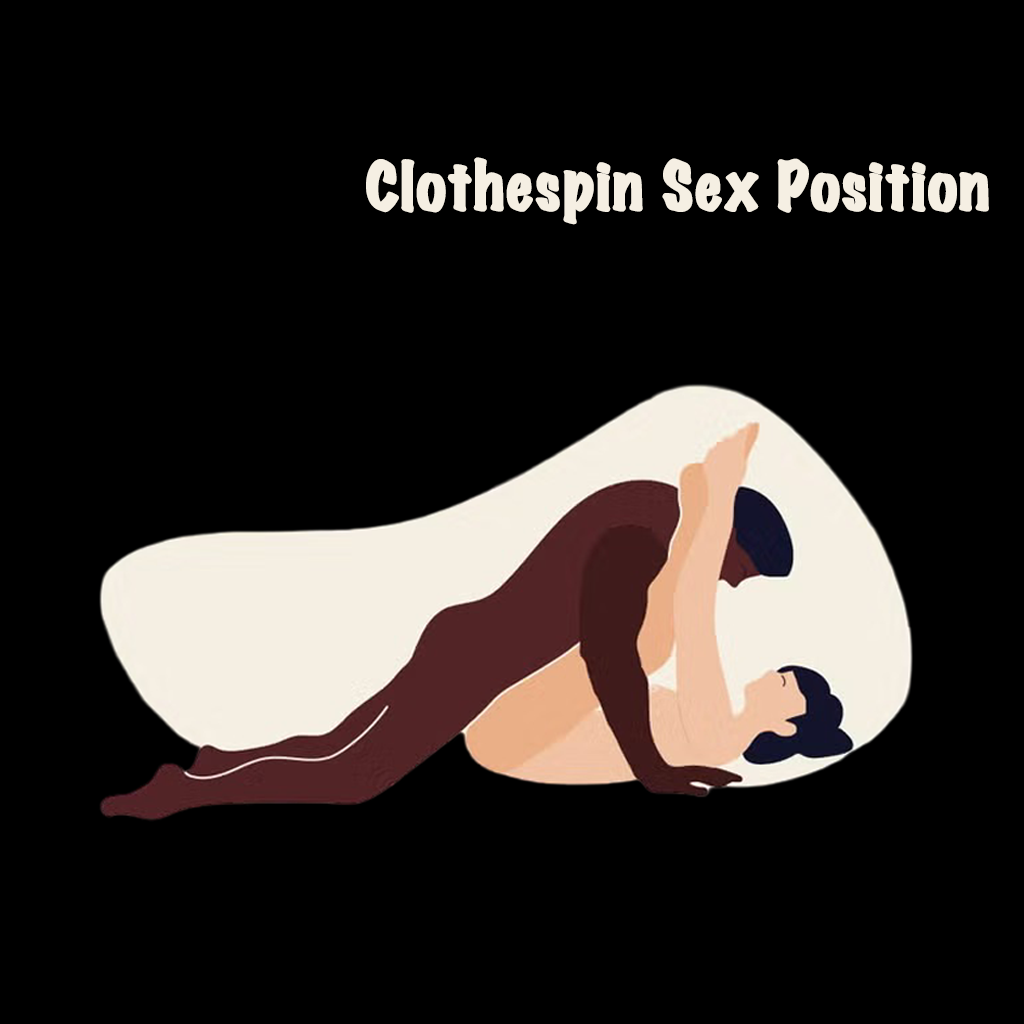
The Clothespin sex position is a modified, deep-penetration variation of the classic missionary or side-lying position. By mimicking the “pinched” alignment of a wooden clothespin—where one partner’s legs are closed or resting tightly over the other’s hips/shoulders—it offers maximum pelvic contact, effortless clitoral stimulation, and deep, controlled penetration.
What Is the Clothespin Sex Position?
The clothespin sex position is a partnered position that focuses more on body alignment, closeness, and controlled movement rather than being overly complicated. The name comes from its resemblance to the shape of a clothespin, as the positioning of the bodies creates a similar folded or “pinched” appearance.
This position is often considered a good option for couples who want to try something different while keeping a slower pace and maintaining a stronger sense of connection. It generally requires low to moderate flexibility, making it a more approachable choice for many couples.
Step-by-Step: How to Execute the Clothespin Position
Step 1: The Base. Partner A (the receiving partner) lies flat on their back, while Partner B (the inserting partner) kneels between their legs, similar to the start of the missionary position.
Step 2: The “Pinched” Fold. Partner A raises their legs, but instead of wrapping them around Partner B’s waist, they keep their thighs tightly closed together, resting their calves or ankles over Partner B’s shoulders or chest. This creates the tight, “folded clothespin” shape.
Step 3: The Entry & Lock. Partner B leans forward, sliding in at a shallow, downward angle. Partner A’s closed thighs squeeze Partner B’s hips, creating a highly snug, tight sensation for both.
Alternative (Side-Lying Clothespin): For a low-energy or pregnancy-friendly version, both partners lie on their sides facing each other, with Partner A raising their top leg over Partner B’s hip to lock the position.

The Anatomy of Pleasure: Why the Clothespin Feels So Good
It comes down to biology and physics:
Unmatched G-Spot Friction: The upward tilt of the receiver’s pelvis, combined with the tight thigh squeeze, naturally aligns the entering partner’s shaft with the anterior wall of the vagina (where the G-spot resides).
The Squeeze Effect (Extra Tightness): By keeping the receiving partner’s thighs closed and “pinched,” the vaginal opening naturally tightens. This provides increased friction and sensory feedback for both partners.
Hands-Free Clitoral Contact: The close pelvic bone-to-bone contact allows for constant, rhythmic rubbing against the clitoris during movement.
Why Some Couples Like the Clothespin Position
Another reason some couples like this position is that it allows for small changes in body alignment, support, and pacing. These simple adjustments can make the experience feel more natural and relaxed, rather than turning it into a matter of trying to achieve a specific shape or form. Research on sexual experience quality also suggests that satisfaction is rarely determined by one specific factor or technique.
A large national U.S. study involving 38,747 adults by David A. Frederick, Janet Lever, Brian J. Gillespie, and Justin R. Garcia found that factors such as sexual communication, emotional connection, variety, and mutual satisfaction play a much bigger role in overall intimacy and satisfaction.
A study published in the Journal of Sexual Medicine on the development and validation of a sexual experience quality scale highlights the importance of looking at the bigger picture, including individual differences, personal preferences, emotional factors, and partner interaction.
In other words, what works well for one couple may not feel the same for another. This is why many couples find that making small adjustments, communicating openly, and focusing on mutual comfort can have a greater impact than simply trying to recreate a position exactly as shown.
Sexual health professionals generally recommend focusing on comfort and communication instead of trying to copy positions exactly as they appear in illustrations.
Compared with more physically demanding positions, some people enjoy its slower pace, which can make it easier to communicate, check in with each other, and make adjustments based on what feels right.
How to Make the Position More Comfortable
When trying any new position, comfort should always come before getting every detail “right.” From an ergonomic standpoint, small adjustments to support, body alignment, and communication can make a surprisingly big difference.
Support Your Lower Back and Knees
Good support can go a long way in reducing unnecessary pressure on your joints and muscles. A pillow can add extra cushioning and help improve body alignment, while a supportive mattress provides a more stable foundation. It’s also worth paying attention to how body weight is distributed. If too much pressure stays on one area for too long, discomfort or muscle fatigue can build up faster than you might expect. Small adjustments—whether that’s repositioning a pillow, shifting your weight, or changing your angle slightly—can often make the experience feel much more comfortable.
Many couples also mention that a position may feel great at first but become less comfortable after a few minutes. When that happens, simple changes usually work better than trying to hold the same posture. Repositioning a pillow, redistributing body weight, or taking a brief pause to reset can help relieve pressure and make things feel more natural again.
Adjust for Height Differences
If there’s a noticeable height difference between partners, a few small adjustments can make the position feel much more balanced. Changing your stance, adjusting body alignment, or adding extra support where needed often helps both partners find a setup that feels comfortable without forcing awkward angles.
Communicate and Change Angles
Comfort isn’t something you figure out once and forget about—it changes throughout the experience. Checking in with each other, making small adjustments, and changing angles when needed can help both partners stay comfortable. And if something starts to feel painful or simply doesn’t feel right, it’s always better to pause, adjust, or stop. There’s no “perfect” version of this position. The best one is the version that feels comfortable and works well for both of you.
Common Mistakes Most Couples Make
When trying the clothespin sex position, it’s easy to get caught up in making it look “right” instead of paying attention to what actually feels comfortable. In reality, body mechanics, communication, and small adjustments usually have a much bigger impact than copying a picture. Avoiding a few common mistakes can make the experience feel more comfortable and natural for both partners.
✓ Copying online illustrations exactly
Every body is built differently. Photos and illustrations are meant to give you a general idea, not a blueprint. Don’t be afraid to adjust the position so it works for your body instead of trying to match an image perfectly.
✓ Ignoring body proportions
Height, flexibility, and overall body shape can all influence how comfortable a position feels. What works well for one couple may need a few tweaks for another, and that’s completely normal.
✓ Moving too quickly
There’s no need to rush into a new position. Taking a little extra time to settle in, communicate, and make small adjustments often leads to a more comfortable experience.
✓ Skipping support cushions
A pillow or cushion might seem like a small detail, but it can make a noticeable difference. Extra support can improve alignment and help reduce pressure on the lower back, hips, or knees.
✓ Staying in one position for too long
Even a comfortable position can become tiring if you hold it for too long. Shifting your weight, changing angles, or taking a short break can help reduce muscle fatigue and keep both partners comfortable.
✓ Assuming one position works for everyone
There’s no such thing as a universally perfect position. Comfort depends on individual preferences, mobility, body proportions, and how well partners communicate and adapt together.
Who Should Modify or Avoid the Clothespin Position?
While highly approachable, the physical mechanics of the Clothespin position put specific weight and extension demands on certain joints. If you have the following pre-existing conditions, apply these modifications:
Lower Back Pain (Herniated Discs/Sciatica): The deep pelvic tilt required in the standard version can cause hyperflexion of the lumbar spine. The Fix: Transition to the Side-Lying Clothespin, which keeps the spine in a neutral, supported alignment.
Tight Hip Flexors or Knee Discomfort: Holding thighs tightly together while elevated can strain tight hips. The Fix: Do not force the ankles over the partner’s shoulders. Instead, let the receiving partner rest their calves tightly against the outside of the inserting partner’s ribs.
Editor’s Experience Note
After looking through conversations from couples exploring different positions, one thing comes up again and again: comfort usually has less to do with the position itself and more to do with whether it works for each person’s body. Many people find that small changes, like adding extra support, slowing things down, or simply talking more openly, can make a much bigger difference than trying to copy an online example perfectly.
Frequently Asked Questions
Is the clothespin sex position beginner friendly?
Yes. The clothespin sex position is generally considered beginner-friendly because it doesn’t usually require advanced flexibility or complicated body positioning. The key is to take your time, communicate openly, and make small adjustments based on what feels comfortable instead of trying to recreate a position exactly.
Does it require flexibility?
Not a great deal. Most people with average mobility can try this position comfortably, although some flexibility in the hips, knees, and lower back may help. If something feels awkward, a few simple adjustments or extra support can often make a noticeable difference.
Is it comfortable for couples with different heights?
It can be. Couples with a noticeable height difference may need to experiment with body positioning, stance, or support to find what feels most natural. A few small changes are often enough to improve alignment and overall comfort.
Can pillows make it more comfortable?
Absolutely. Pillows are one of the easiest ways to add support and improve body alignment. They can help relieve pressure on the knees, hips, or lower back, making it easier to stay comfortable without putting unnecessary strain on your body.
Is this position safe for people with knee or back discomfort?
If you have existing knee or back discomfort, it’s best to approach any new position with care. Listen to your body, make adjustments as needed, and use extra support if it helps. If you experience pain at any point, stop and try a different setup or position. Comfort should always come before trying to maintain a particular posture.
Does the clothespin position allow for deep penetration?
Yes, because the pelvis is tilted upward, this position allows for very deep access. If it feels too deep or causes discomfort against the cervix, the inserting partner should lean back slightly, or place a pillow under the receiver’s lower back to adjust the angle.
What is the best way to add clitoral stimulation in this position?
Since the receiver’s thighs are closed, manual stimulation by hand can be tricky. The best method is to use a slim, waterproof wand or bullet vibrator held directly between the pubic bones, or rely on the natural, tight skin-to-skin friction created by the “pinched” pelvic alignment.
Pro Tip: Enhancing Pleasure with Sex Toys
Because the Clothespin position relies on keeping your thighs pressed tightly together, it can sometimes limit the space available for manual stimulation. Integrating sex toys can be a game-changer for bridging that gap and intensifying the experience:
- Small Vibrators or Bullets: Since this position centers on rhythmic, bone-to-bone contact, placing a small, slim, or bullet-style vibrator between the pubic bones can be highly effective. The natural pressure of your bodies pressing together will hold the toy in place, allowing the vibrations to radiate through the area without needing to constantly adjust your hands.
- Vibrating Rings: For the inserting partner, wearing a vibrating ring can add a consistent level of clitoral stimulation for their partner during every movement. It allows you to maintain the “pinched” alignment while ensuring constant, steady pleasure.
- Male Masturbator: Use a masturbator to engage in mutual foreplay while still fully clothed or lying side-by-side. This allows the inserting partner to build arousal and sensitivity at their own pace, helping them last longer and stay more present during the eventual transition into the Clothespin position.
Conclusion
Every body is different, and there’s no single approach that works for every couple. When exploring the clothespin sex position, communication, comfort, and being aware of each other’s needs matter much more than trying to achieve a specific form. Comfort should always come before complexity, and adjusting a position to fit your own body is completely normal.
Understanding the basics of body mechanics and communication can help couples explore new positions in a more comfortable and confident way. Instead of focusing on copying a picture exactly, it’s often more helpful to find what feels natural and works well for both partners.
Sources & References
- Frederick, D. A., Lever, J., Gillespie, B. J., & Garcia, J. R. What Keeps Passion Alive? Sexual Satisfaction Is Associated With Sexual Communication, Mood Setting, Sexual Variety, Oral Sex, Orgasm, and Sex Frequency in a National U.S. Study. PubMed.——
https://pubmed.ncbi.nlm.nih.gov/26900897/ - Journal of Sexual Medicine. The Development and Validation of a Brief Quality of Sexual Experience Scale.——https://academic.oup.com/jsm