Blog
Bicycle Sex Position: Setup, Stability Tips, and Comfortable Variations


The name “Bicycle sex position” is used for two different arrangements. In the supine version, the receiving partner lies face-up with the knees bent or legs raised while the other partner faces them. In the standing rear-entry version, the receiving partner faces away, bends forward, and supports their upper body while the other partner stands behind.
These are separate positions, not two stages of one movement. This guide explains each version independently so the setup, support points, and adjustments do not get mixed together.
The Two Bicycle Positions at a Glance
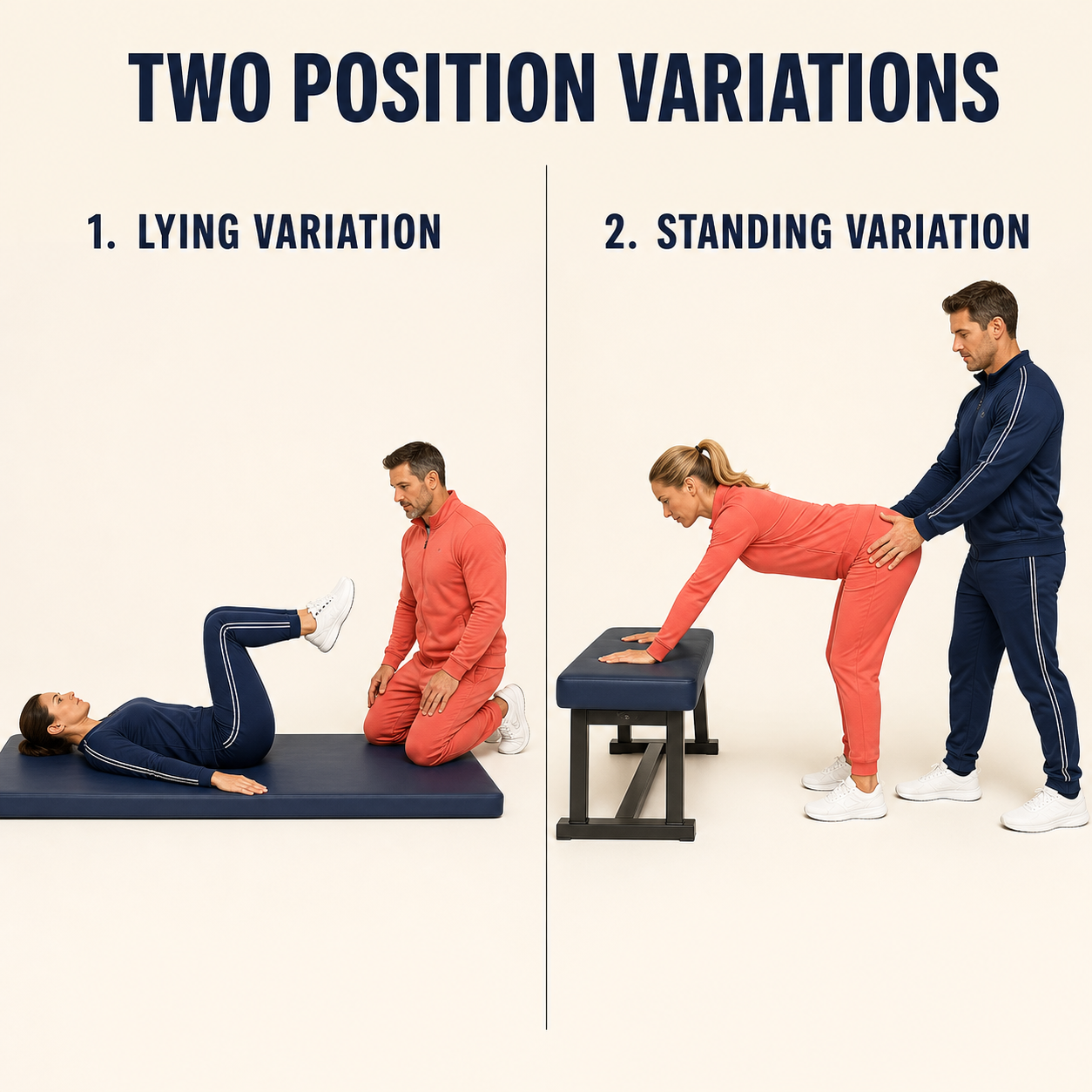
| Feature | Supine Bicycle | Standing Rear-Entry Bicycle |
|---|---|---|
| Receiving partner | Lies face-up with knees bent or legs raised | Faces away and bends forward with the upper body supported |
| Other partner | Faces them while kneeling on the mattress or standing at the bed edge | Stands behind and may support the hips |
| Main support | Mattress | Hands and feet, preferably with a stable surface for the hands |
| Defining feature | A back-lying, raised-leg arrangement; some guides add a small alternating leg motion | A forward-bent, rear-entry arrangement with both partners standing |
| Main practical issue | Bed height and leg comfort | Balance, wrist support, and hamstring or lower-back comfort |
The easiest way to identify the version is to look at the receiving partner: face-up on a mattress means the supine version; facing away and bending forward means the standing rear-entry version.
Version 1: Supine Bicycle Position
In the supine Bicycle, the receiving partner lies on their back with the knees bent or legs raised. The other partner faces them from between the legs while kneeling on the mattress or standing at the edge of the bed. Some guides show the legs changing height in a slow, pedal-like motion; others use Bicycle for the same basic raised-leg arrangement without continuous movement.
This version is primarily mattress-supported. Bed height matters only when the other partner chooses to stand at the edge.
How to Set Up the Supine Bicycle
- Start fully supported. The receiving partner lies face-up with the head, shoulders, back, and hips resting on a stable mattress.
- Bend both knees. Begin at a relaxed height. The knees do not need to touch the chest.
- Choose the other partner’s position. Kneeling on the mattress is usually easier to align. Standing at the bed edge works only when the mattress height permits a stable stance.
- Set the distance first. Move closer or farther apart before raising the legs higher.
- Add leg movement only if wanted. One leg can lower slightly as the other knee draws closer, then the sides switch. Keep the range small and slow.
- Return to the starting position when needed. Both knees can remain bent and still whenever the legs become tired.
Supine Bicycle Adjustments
| If this happens | Try this |
|---|---|
| The legs tire quickly | Stop alternating them and keep both knees comfortably bent. |
| The lower back feels compressed | Lower the knees and remove any extra lift under the hips. |
| The bed feels too high or too low | Have both partners move onto the mattress and use a kneeling setup. |
| The hips move from side to side | Reduce the leg movement and keep the pelvis resting on the mattress. |
| The neck feels strained | Use normal head support rather than lifting the hips higher. |
Who May Prefer Another Version?
The supine setup may be uncomfortable for someone whose knees or hips do not tolerate a raised, bent-leg position. A side-lying or lower-leg face-to-face position may require less hip flexion while keeping the body supported.
Version 2: Standing Rear-Entry Bicycle Position
The standing Bicycle shown in some guides is not a lift. The receiving partner stands in front, faces away, and bends forward at the hips. Their hands support the upper body on the floor or, more practically, on a stable bench or bed. The other partner stands behind and may hold the hips for added stability.
This version does not use the mattress in the same way as the supine Bicycle. Its main challenges are maintaining a secure hand position, keeping both feet planted, and choosing a forward bend that does not strain the wrists, hamstrings, or lower back.
How to Set Up the Standing Rear-Entry Bicycle
- Clear the standing area. Both partners need a dry, uncluttered surface with enough room to adjust their feet.
- Use a stable hand support. The receiving partner faces away and places both hands on a sturdy bench, bed, or other surface that will not slide.
- Bend forward from the hips. Keep the knees softly bent instead of locking the legs or forcing the hands all the way to the floor.
- Have the other partner stand behind. They should establish a balanced stance before holding the receiving partner at the hips.
- Adjust with the feet. Change the distance between the partners by taking small steps rather than pulling the receiving partner backward.
- Reduce the forward bend if needed. A higher support surface creates a less demanding angle and makes it easier to return to standing.
Standing Bicycle Adjustments
| If this happens | Try this |
|---|---|
| The wrists carry too much weight | Use a higher padded support and keep more weight through the feet. |
| The hamstrings feel tight | Bend the knees more and raise the hand support. |
| The lower back feels strained | Shorten the forward bend and keep the torso closer to horizontal rather than forcing it lower. |
| The feet feel unstable | Stop, reset both stances, and avoid slippery flooring or loose rugs. |
| The partners feel too far apart | Move the feet closer in small steps; do not pull on the waist. |
Who May Prefer Another Version?
This arrangement may not be a good fit for someone with wrist, balance, hamstring, or lower-back limitations. The supine Bicycle keeps the receiving partner supported by the mattress and is the more stable of the two versions.
Supine vs. Standing Bicycle: Which One Should You Try?
Choose the supine Bicycle if you want mattress support, a face-to-face arrangement, and an easy way to pause by lowering the legs. Choose the standing rear-entry Bicycle if both partners are comfortable standing and the receiving partner has a reliable surface for their hands.
For a first attempt, the supine version is usually simpler because the receiving partner’s body weight remains on the mattress. The standing version demands more balance and should not be treated as the automatic “advanced step” after the supine setup.
Why Do Guides Show Different Bicycle Positions?
Unlike widely recognized names such as missionary or cowgirl, “Bicycle” is not used consistently across every position guide. Some sources apply the name to a face-up raised-leg arrangement, while others use it for a standing rear-entry position. A few descriptions also emphasize a pedaling leg motion, while others do not.
When two guides disagree, compare the body arrangement rather than the label. Check whether the receiving partner is face-up or facing away, whether the mattress or the hands provide support, and whether the other partner is in front or behind.
Bicycle vs. Similar Positions
The supine Bicycle can resemble other face-to-face or bed-edge positions. What distinguishes it is the raised, bent-leg arrangement and, in some versions, the slow alternating movement. The Waterfall position guide describes a different bed-supported setup rather than another name for Bicycle.

The standing rear-entry Bicycle can resemble other standing rear-entry positions. Its clearest feature is the receiving partner’s forward bend with both hands supporting the upper body while the other partner remains standing behind.
Frequently Asked Questions
What is the Bicycle sex position?
The name commonly refers to one of two arrangements: a face-up, raised-leg position with the other partner in front, or a standing rear-entry position in which the receiving partner bends forward and supports the upper body with both hands.
Why do some websites show a different Bicycle position?
The name is not standardized across all sex-position guides. Some use it for the supine version, while others use it for the standing rear-entry arrangement. Look at the actual body setup instead of assuming the name always identifies one position.
Does the supine Bicycle require a pedaling motion?
Not every guide uses the name in exactly the same way. If you add an alternating leg motion, keep it slow and small. The legs can also remain bent and still when movement becomes tiring.
Does the standing Bicycle involve lifting a partner?
Not in the version covered here. The receiving partner stays on their feet, faces away, bends forward, and supports the upper body with both hands. The other partner stands behind.
Which Bicycle version is easier?
The supine version is generally more stable because the mattress supports the receiving partner. The standing version asks more from balance, the legs, and the upper-body support point.
Final Takeaway
The supine and standing Bicycle positions share a name, but not a setup. Treat them as two separate arrangements: one face-up and mattress-supported, the other facing away with both partners standing. Once that distinction is clear, the instructions and illustrations become much easier to follow.
Looking for something you can enjoy on your own? Explore our male masturbator collection to compare different sizes, designs, and formats, or continue browsing our sex position guides for more ideas.
-
3.5lb Dragon Sex Doll Torso Butt Furry Pocket Pussy
Original price was: $139.99.$124.99Current price is: $124.99. -
16.2lb Furry Ass Sex Doll Green Furry Fleshlight Butt(Yoshiro)
$422.99 -

4.6lb Alien Sex Doll Torso Furry Hentai Onahole(Ruby)
$189.99 -

4.5lb Chubby Hentai Furry Sex Doll Torso
$189.99 -
Dragon Fleshlight Series Premium Silicone Futa Sex Torso
Price range: $149.99 through $214.99