Blog
Frog Sex Position: A Rear-Entry Guide for Comfort, Support & Communication

Difficulty Rating: ★★★☆☆ (Moderate)
Flexibility Required: ★★★☆☆ (Moderate)
Comfort Rating: ★★★★☆ (High, when adjusted to individual needs)
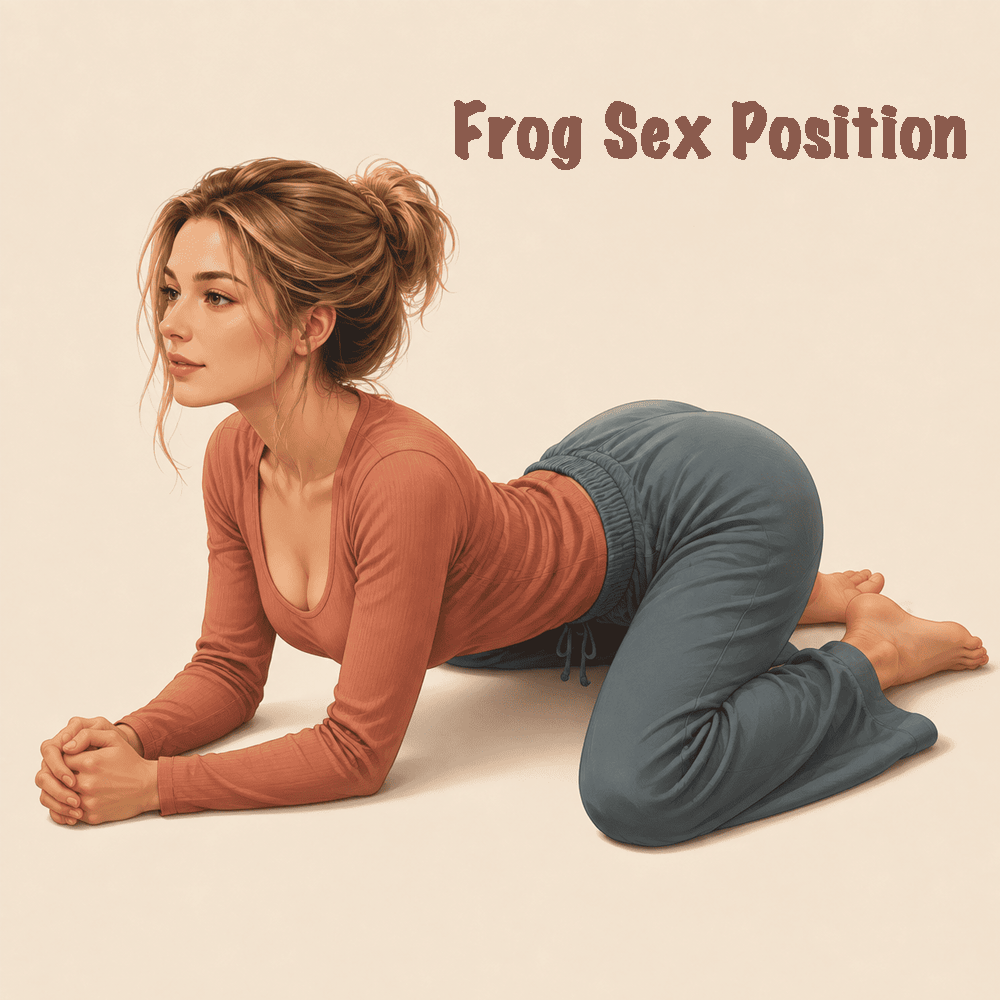
The frog sex position usually refers to a rear-entry variation: the receiving partner is forward-facing with the knees bent and turned outward in a frog-like shape, while the other partner is behind. It is often also called froggy style. The exact depth of the squat, torso angle, and amount of support can vary a lot.
The useful goal is not to copy the deepest version of the pose shown online. Start with a supported, comfortable angle; keep communication easy; and adjust or stop if either person feels knee, hip, groin, back, or balance strain.
Quick answer: who may find the frog position practical?
It may suit adults who prefer a rear-entry layout but want to vary the usual hands-and-knees posture. It is not automatically easier or more intense than other positions. The real trade-off is that the bent-knee stance can place more demand on the hips, knees, wrists, and lower back if the setup is too low, too wide, or unsupported.

What is the frog sex position?
In the common version, the receiving partner faces away and leans forward with the knees bent outward. Their upper body may be supported by hands, forearms, a pillow, or the edge of a stable surface. The partner behind can remain kneeling or use a similarly stable position.
It resembles a low, compact variation of rear-entry sex. The “frog” name comes from the lower-body shape, not from one required degree of flexibility. A higher, less dramatic stance still counts if it is the version both partners mean.
Step-by-Step: How to Set Up the Frog Position Comfortably
- Start with a stable surface
Choose a stable bed or padded surface with enough room for both partners to adjust. - Set the receiving partner’s base position
The receiving partner faces forward, bends the knees comfortably, and keeps them only as far apart as feels natural. - Add upper-body support
Use forearms, a firm pillow, or a cushion under the chest when needed. This reduces wrist and lower-back strain. - Let the partner behind adjust height and distance
Start from a stable kneeling position. Adjust distance and body height rather than forcing the receiving partner into a deeper squat. - Check comfort before continuing
Ask about knee pressure, hip tension, balance, and lower-back comfort. Change the angle or stop if anything hurts.

Why search results can show different positions
The label is inconsistent. Some guides use frog for a face-to-face, bent-knee position; others use froggy for the forward-facing rear-entry version. Leapfrog can also describe a related but more forward-leaning layout.
For this article, “frog sex position” means the rear-entry version shown above, because that is the version most commonly represented by current image and guide results. If a partner has seen a different image, agree on the orientation before starting rather than relying on the name alone. One current guide explicitly describes “froggy” as rear-entry, while another uses “frog” for a face-to-face alternative. See the rear-entry definition and an example of the alternate usage.
How to make the position more comfortable
Keep the knee angle modest at first
Do not begin with the knees pushed as wide as possible. Start with a smaller, natural bend. If the hips and knees feel settled after a moment, adjust in small increments. A sharp stretch, pinching, or pressure is a reason to reduce the angle—not something to work through.
Choose the right upper-body support
Hands can work for a short time, but forearms or a firm pillow often reduce wrist and shoulder fatigue. A pillow under the chest or torso can also make the forward lean less demanding. The support should make breathing and balance easier, not force the back into a deeper arch.
Use height and distance to solve alignment
When partners have different heights, avoid asking the receiving partner to hold an uncomfortable squat just to make the angles line up. A small change in the support height, the other partner’s kneeling position, or the distance between bodies is usually the simpler fix.
Let the person in front set the pace of adjustments
The forward-facing partner is best placed to notice knee pressure, wrist fatigue, and lower-back tension early. Short, plain check-ins work better than guessing: “More support?” “Too low?” “Want to change the angle?” If anyone feels pain, numbness, dizziness, instability, or restricted breathing, pause and change positions.

Common mistakes that make it uncomfortable
Copying the picture instead of the general idea
A photo cannot account for different limb lengths, mobility, or mattress firmness. Use it to understand orientation only. The best version will probably look less extreme than a posed image.
Putting all the weight through the wrists or knees
If the setup leaves one person holding too much body weight in the hands, knees, or low back, add support or choose a different position. Comfort should be sustainable for more than a few seconds.
Ignoring the difference between “new” and “painful”
A new posture can feel unfamiliar. Pain, tingling, cramping, or loss of balance is different. Stop rather than trying to acclimate to it. Adults with a current injury, recent surgery, recurring joint pain, pregnancy-related mobility concerns, or any condition affecting movement should choose a lower-strain alternative and ask a qualified clinician for individual medical guidance when needed.
Frog position vs. doggy style vs. leapfrog
| Position name | General orientation | Main comfort question |
|---|---|---|
| Frog / froggy | Forward-facing, rear-entry; knees bent outward | Can the hips, knees, and upper-body support stay relaxed? |
| Doggy style | Forward-facing rear-entry; usually hands-and-knees | Is the back, wrist, and knee support comfortable? |
| Leapfrog | Forward-facing rear-entry with a lower torso angle | Does the lower position create neck, shoulder, or breathing strain? |
These names are not standardized across publishers. Treat the image and general orientation as the deciding reference, not the label by itself.
FAQ
Is the frog sex position rear-entry?
Usually, yes. In the dominant use of the term, the receiving partner faces forward while the other partner is behind. Some publishers use the name differently, which is why confirming the orientation matters.
Is the frog position the same as doggy style?
They are related rear-entry positions, but the frog variation usually emphasizes a lower stance and outward-bent knees. Doggy style more often starts from a standard hands-and-knees posture.
Do you need to be very flexible?
No. A modest bend, good support, and an easy-to-hold position are more useful than a wide range of motion. If flexibility is the only way to make the pose work, choose another option.
What support can help?
A firm pillow under the torso, forearm support instead of straight arms, and a stable surface can reduce unnecessary strain. Use only the support that improves balance and comfort.
When should you stop?
Stop or switch positions with pain, numbness, tingling, dizziness, unstable balance, or restricted breathing. No position is worth pushing through discomfort.